
 |
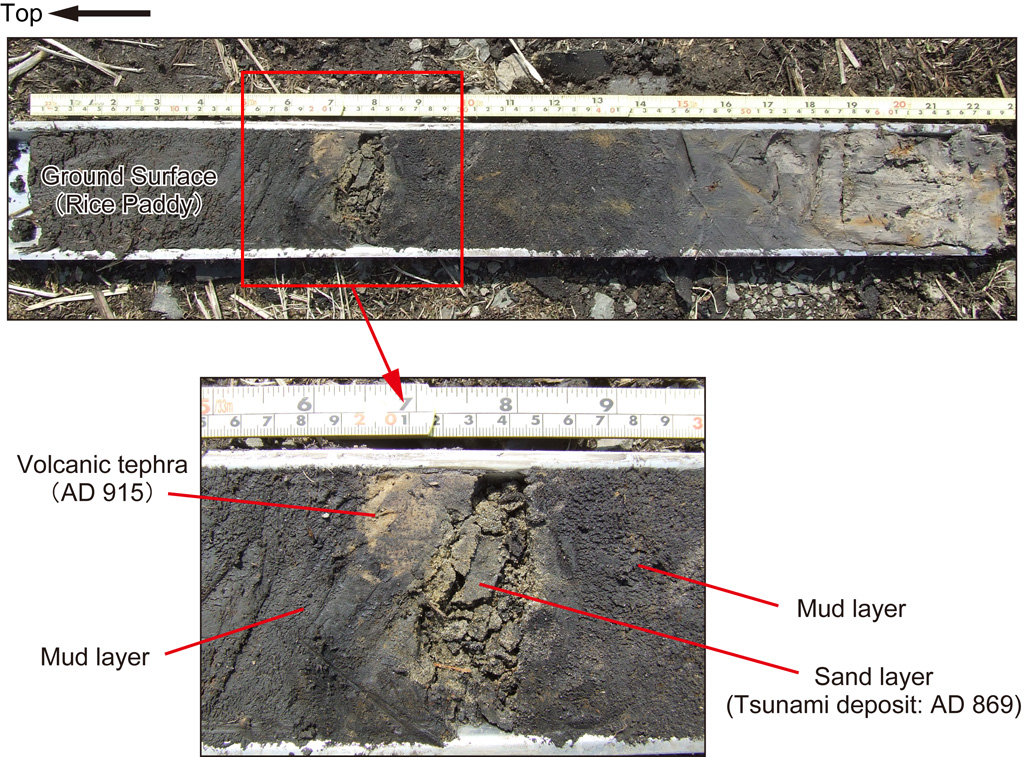
| A sand layer deposited by the AD 869 Jogan tsunami |
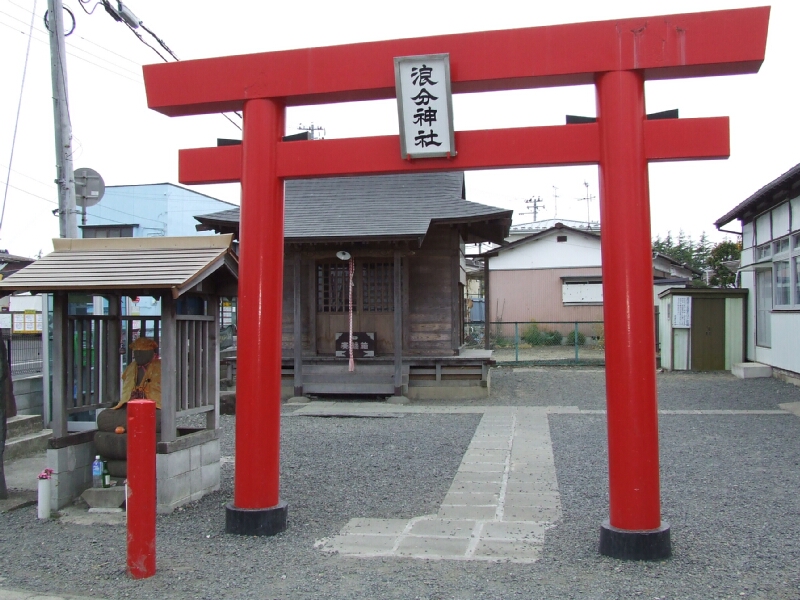 |
| Namiwake Shinto shrine (Sendai City) |
Theme:
Sediments and historical accounts of the Jogan tsunami
Leaders:
Key Words:
Related Topics:
Description:
It is known from historiography of ancient government and several local traditions that a strong earthquake followed by tsunami struck northeastern Japan in AD 869 (Jogan 11). The historiography documented that the coastal plain had changed into a wilderness of water because of the tsunami, although the exact location and inundation area have remained ambiguous. Field excavations in the wetlands of Sendai Plain (now used for rice paddies) demonstrated that traces of the tsunami inundation have been preserved as a sand layer within marsh deposits, and the distribution of the sandy tsunami layer reached about 3 km inland from the present coastline. The magnitude of the Jogan earthquake is estimated as 8.3-8.5 based on data from the tsunami deposit and interpretation of the historical accounts. The Jogan earthquake tsunami is thought to be the largest historical event to have struck the Pacific coast of northeastern Japan. The field trip includes the four activities listed below.
The field trip consists of four activities listed below:
Maximum number of participants: No limit
Costs: Included in the registration fee
Note: