
[Print version] (MS-Word)
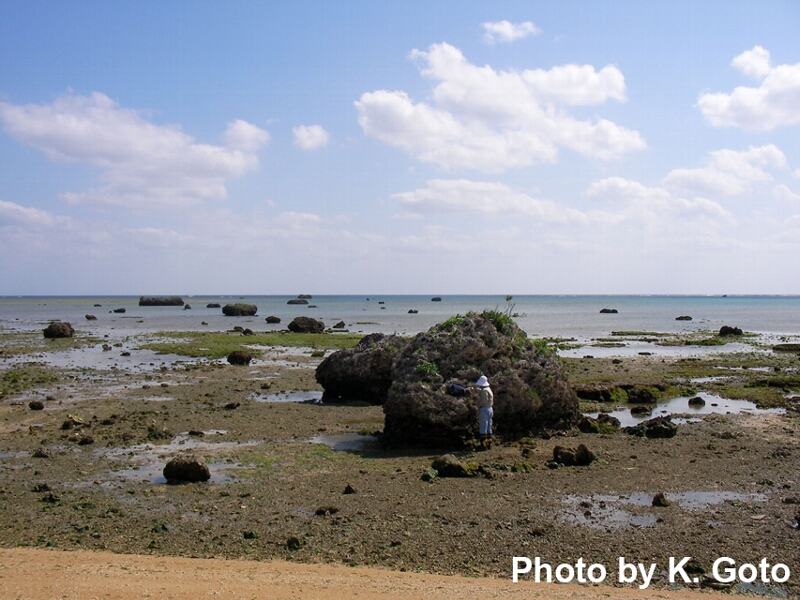 |
| Coral boulders deposited by the 1771 Meiwa Earthquake Tsunami (Miyara Bay, Ishigaki Island) |
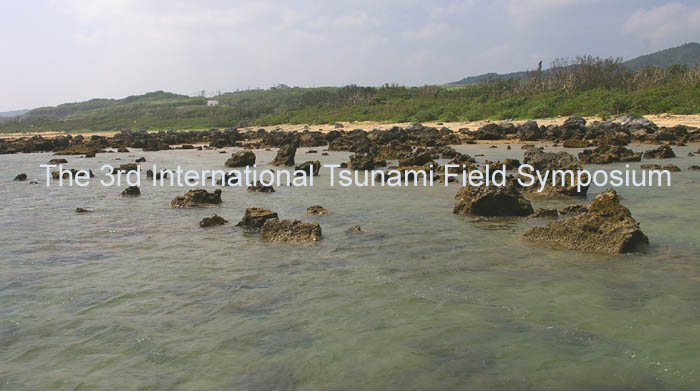 |
| Numerous tsunami boulders deposited along the eastern coast. |
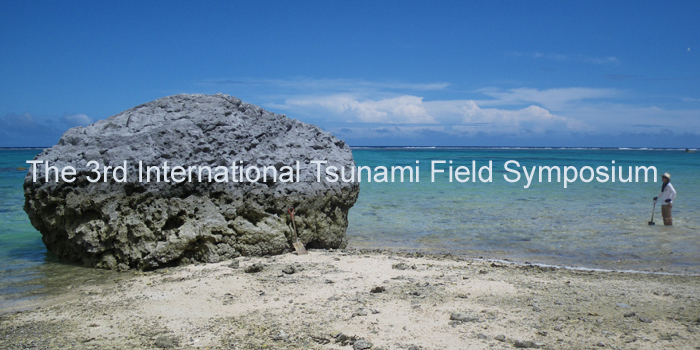 |
| A largest Porites boulder of 1771 Meiwa Tsunami origin. |
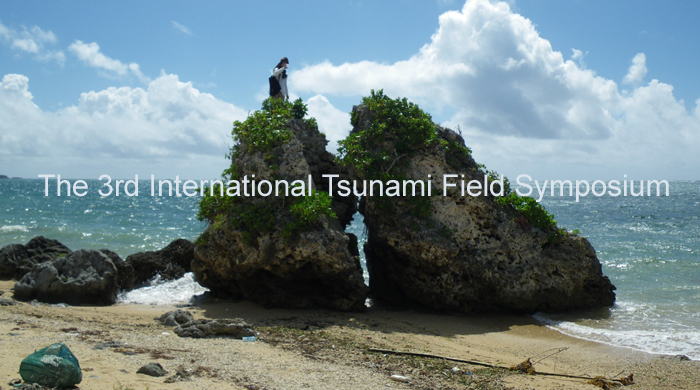 |
| A large tsunami boulder that was split into two pieces at the center. |
Theme:
Leaders:
Key Words:
Related Topics:
Description:
At Ishigaki Island, numerous large pieces of coral and reef boulders are scattered along the coast. These boulders might have been transported by the 1771 Meiwa Tsunami (approx. 30 m in maximum runup height), according to historical documents and scientific evidence. Alternatively, some boulders at Ishigaki Island might have been deposited on the reef by storm waves of one or more of the many typhoons that attack the island every year. Participants in this trip will observe boulders deposited at Ishigaki Island and study different tsunami and storm wave influences on boulder displacement. Participants will also visit historical monuments associated with the 1771 Meiwa Tsunami.
Maximum number of participants: 20 persons
Costs: 130,000 JPY (including one-way railway fare from Sendai (or Shin-Hanamaki) to Haneda Airport (Tokyo) (13 April), round trip fare between Haneda Airpor and Ishigaki Airport, accommodations (3 nights), 2 lunches (15−16 April), 2 dinners (14−15 April), bus, field guide).
Schedule:
Note: